



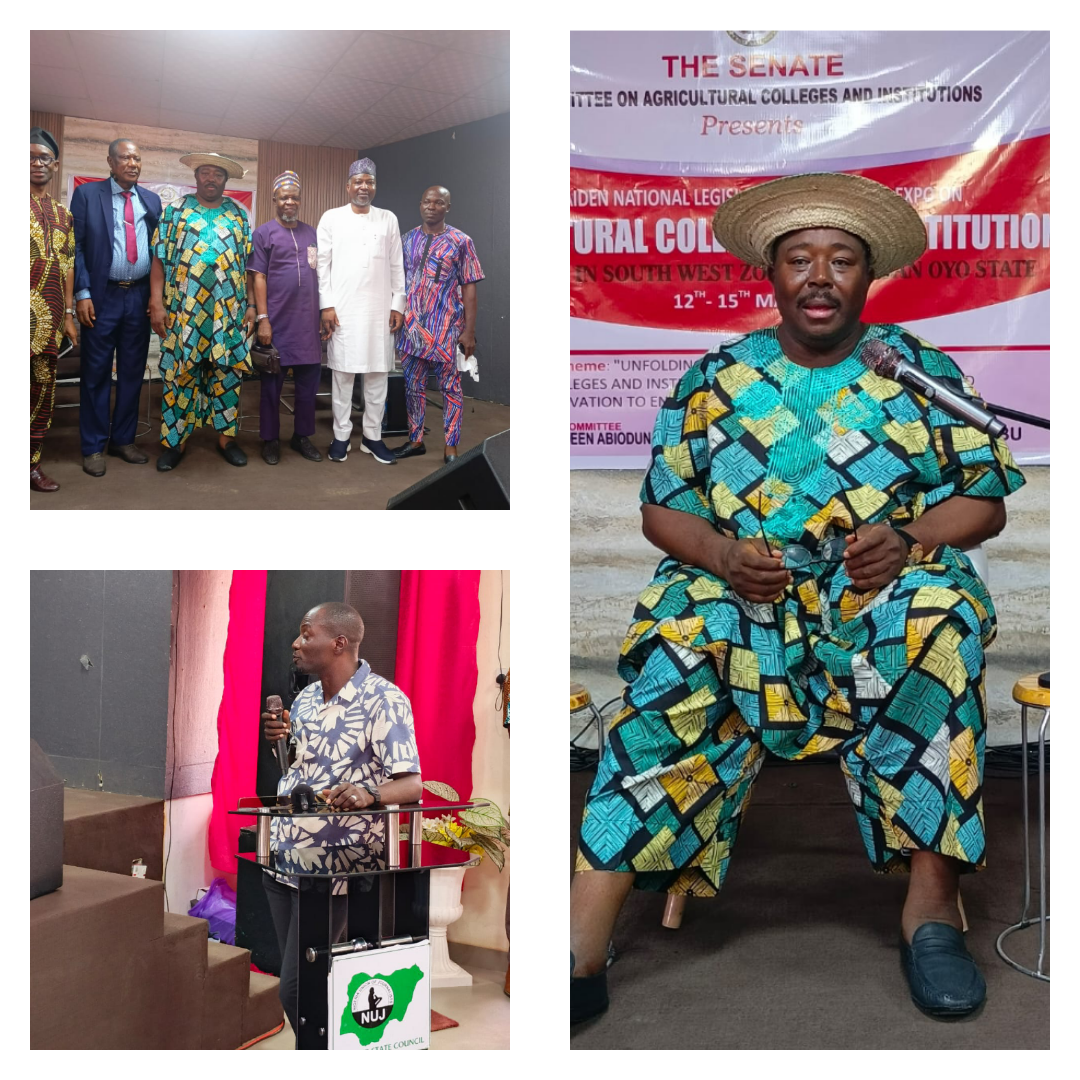
The Nigeria Union of Journalists (NUJ), Oyo State Council, on Monday hosted a media engagement ahead of the maiden National Legislative Summit on Agricultural Colleges and Institutions scheduled to commence Tuesday at the International Institute of Tropical Agriculture (IITA), Ibadan.
The summit, organised by the Senate Committee on Agricultural Colleges and Institutions, is expected to attract agricultural research institutes, tertiary institutions, foreign embassies, development partners and policymakers to deliberate on food security, agricultural reforms, research collaboration and youth empowerment.
Chairman of the Senate Committee, Sharafadeen Abiodun Alli, while addressing journalists at the NUJ Press Centre in Ibadan, said the summit was conceived to reposition Nigeria’s agricultural sector through effective legislation, innovation and strategic partnerships.
According to him, the initiative followed a committee retreat held in December in collaboration with development partners, including PLAC and UK-based organisations, where stakeholders identified the urgent need to strengthen the legislative framework guiding agricultural institutions and research agencies.
“All that we do without research is mere guesswork,” Alli stated, emphasising the need for stronger synergy among research institutes, farmers, the National Assembly and the Federal Ministry of Agriculture and Food Security.
The senator lamented the gap between agricultural researchers and local farmers, noting that many farmers lacked access to improved seedlings, modern farming techniques and technological innovations developed by Nigerian institutions.
He cited examples of improved cocoa seedlings capable of yielding within 18 months compared to the traditional seven-year period, alongside enhanced cassava varieties developed through local research efforts.
Alli disclosed that more than 28 agricultural institutions, 12 embassies and international organisations, including the European Union, GIZ, the British High Commission and the Embassy of Malaysia, were expected to participate in the summit.
He explained that agricultural desk officers from several embassies would also attend to explore areas of international partnership and investment opportunities in Nigeria’s agricultural sector.
The lawmaker expressed concern over Nigeria’s declining agricultural performance despite its rich history in the sector, recalling that Malaysia once sourced oil palm seedlings from Nigeria but had since overtaken the country in global palm oil production.
He attributed the setback to poor policy implementation, inadequate support for research institutions and socio-political distractions affecting national development.
Alli also highlighted ongoing efforts to empower farmers and unemployed youths through partnerships aimed at providing mechanised farming support, land preparation services, harvesting assistance and market access.
According to him, the initiative specifically targets youths and women to encourage greater participation in agriculture and reduce unemployment across the country.
He further revealed that solar-powered dryers had been introduced in some rural communities to minimise post-harvest losses and improve food preservation.
The senator called on journalists to amplify discussions from the summit in order to attract greater government attention, funding and stakeholder support for agricultural institutions.
Earlier, Chairman of the NUJ Oyo State Council, Akeem Abas, described the summit as a timely intervention capable of improving food security and boosting agricultural productivity nationwide.
Abas commended Senator Alli for what he described as visionary leadership and commitment to institutional reforms, noting that the attendance of over 64 media organisations at the parley reflected confidence in the initiative.
Also speaking, Executive Director of the National Horticultural Research Institute, Mohammed Lawal Atanda, described the summit as the first of its kind in Nigeria’s agricultural research sector.
He said the event would help strengthen legislative frameworks and create sustainable pathways for the growth of agricultural research and training institutions.
Acting Executive Director of the Cocoa Research Institute of Nigeria, Adedeji Abiodun Rasheed, stressed the importance of private sector involvement in funding agricultural research and development.
According to him, the government alone could not shoulder the responsibility of revitalising research institutions, urging private investors and agribusiness operators to support innovation in the sector.
Similarly, Oluwatosin Gabriel of the Institute of Agricultural Research and Training said research remained central to national development and food security.
He praised Senator Alli for championing the summit and promoting legislative reforms aimed at strengthening agricultural research and policy implementation in Nigeria.
The summit is expected to continue throughout the week with discussions focusing on food production, research commercialisation, youth empowerment, international collaboration and sustainable agricultural development.